
Calories In - Calories Out
Calories In vs. Calories Out: The Only Fat-Loss Equation That Matters (and the Confounders That Fool You)
Don't kill the messenger — you may not want to hear this. The top line issue is calories in versus calories out. That's the game. Everybody wants the loophole. The food that burns fat. The timing trick. The hormone hack that makes the math not matter.
But there is no loophole. Weight loss comes down to one thing: calories in versus calories out. Eat less energy than you burn, consistently, and you lose weight. That's the mechanism. Everything else is commentary.
This doesn't mean everything else is useless. It means you need to understand the core equation in isolation first — before short-term noise convinces you it's broken. Because the scale will lie to you. Water, sodium, glycogen, digestion, and daily fluctuations will all mask what's really happening. Most people don't fail at fat loss because the equation is wrong. They fail because they misread the data and quit.
The Mechanism: Energy Balance, Simply Stated
Here's how it actually works.: Your body runs on energy. Food provides it. Living — breathing, thinking, moving, training, digesting — spends it. If intake exceeds expenditure, the surplus gets stored, mostly as body fat (unless you satisfy certain specific conditions but more on that in another article). If expenditure exceeds intake, the body pulls from stored energy and you get lighter.
That's it. That's whole truth. This isn't a belief system. It's thermodynamics applied to a biological system. No diet in history has ever worked through any other mechanism. Keto works when it creates a deficit. Fasting works when it creates a deficit. The Mediterranean diet works when it creates a deficit. When they don't create a deficit, they don't work — regardless of what the marketing says.
Hormones matter. Food quality matters. Sleep matters. Gut health matters. But they matter as modifiers of the equation — they influence how much you eat, how much you burn, and how you feel doing it. They don't replace the equation. Insulin doesn't make you store fat in a deficit. A "slow metabolism" doesn't make fat appear from nothing. Understand the core mechanism first, then fine-tune around it.

Protein first. It is the easiest lever on the calories-in side.
"Calories In": Where People Lie to Themselves
Most people who say "I'm in a deficit but I'm not losing weight" are not in a deficit. They're close — close enough to feel deprived, not close enough to lose fat. That's the worst place to be.
The usual suspects:
Untracked eating. The handful of nuts. The cooking oil (120 calories a tablespoon — most people pour three). The bites of your kid's food. The creamer. None of it feels like eating. All of it counts.
Liquid calories. Sodas, juices, fancy coffees, alcohol, smoothies. Your body's satiety signaling barely registers liquid energy. You can drink 600 calories and be hungry an hour later.
Weekend blowouts. Five days of disciplined eating, then Friday through Sunday erase the deficit. A single untracked restaurant dinner can wipe out three days of a 300-calorie deficit. Math doesn't care about your intentions on Saturday night.
"Healthy" food halo. Avocados, olive oil, nuts, granola, dark chocolate — all fine foods, all calorie-dense. Eating clean and eating in a deficit are two different things.
Restaurant and packaged food estimates. Even careful logging has error. Restaurant portions run 20–40% over what apps list. If your numbers are consistently optimistic, your deficit exists on paper only.
None of this requires perfection. It requires attention to detail and honesty. Track everything for two weeks — everything — and the picture usually becomes obvious.

Training is the calories-out lever you control.
"Calories Out": The Four Components
The other side of the equation has four parts, and exercise is the smallest one for most people:
1. RMR — Resting Metabolic Rate (60–70% of your burn). This is what your body spends keeping you alive: breathing, circulation, brain function, cell repair. It's the biggest slice of the pie by far. And it's the number most people get wrong, because calculators estimate it from population averages. An actual RMR test — you lie still, breathe into a mask for 15–20 minutes, and get your real number — removes the biggest variable in your entire nutrition plan. This is why we test it. RMR calculators are a cost effective alternative but you need to hone them over time to make sure they pencil out correctly (and this is where tracking comes in, another story for another time).
2. NEAT — Non-Exercise Activity Thermogenesis (15–25%). Fidgeting, walking, standing, doing your job, living your life. NEAT varies enormously between people and it drops when you diet — your body subconsciously moves less to conserve energy. This is why the person who takes the stairs and walks the dog loses fat faster than the person who trains hard and sits the other 23 hours. Daily step targets exist for this reason.
3. EAT — Exercise Activity Thermogenesis (5–10%). Your actual training. Important for muscle, strength, bone density, and health — but a surprisingly small slice of total burn. A brutal hour in the gym might be 300–500 calories. That's one restaurant appetizer. Train for strength and muscle. Don't train to "earn" food.
4. TEF — Thermic Effect of Food (~10%). Digestion costs energy. Protein costs the most to digest (20–30% of its calories), carbs less (5–10%), fat least (0–3%). One more reason protein earns its place.
When someone's fat loss stalls, the instinct is to add more exercise. That’s great if you have the time and sometimes this is the correct lever to pull. Sometimes. But usually the bigger levers are RMR accuracy (are your targets even correct?), NEAT (are you moving less than you think?), and intake honesty (are you eating more than you think?).
The Confounders That Fool You
Here's where most people lose the plot. The equation works on a timeline of weeks. The confounders operate on a timeline of hours and days. If you judge a weekly process by daily data, you'll think it's broken when it's working fine.
Water retention. The big one. Sodium, hard training, stress, poor sleep, and hormonal cycles all cause water retention. You can hold 2–5 pounds of water overnight without gaining a gram of fat. The scale doesn't distinguish between water and fat. You have to.
Sodium. A salty meal can add several pounds of water weight by morning. It's transient. It means nothing about your fat loss. But it ruins a lot of Monday mornings.
Glycogen. Every gram of stored carbohydrate holds roughly 3 grams of water. Start a diet, deplete glycogen, and you'll drop 3–5 pounds in the first week — mostly water. People celebrate, then stall when the water's gone and actual fat loss (slower) takes over. Conversely, a high-carb day refills glycogen and the scale jumps. Neither reflects fat change.
Digestion and gut contents. Food in transit has weight. A big meal, extra fiber, or slower digestion can add pounds to the scale that are literally just food still inside you. Weighing yourself after a heavy dinner day versus a light one isn't a comparison — it's two different measurements.
Scale fluctuations. Body weight naturally swings 1–3% day to day. If you weigh 200 pounds, that's 2–6 pounds of daily noise. Judging a process that loses 1–2 pounds of fat per week by a tool with 6 pounds of daily noise is like measuring a room with a rubber ruler.
Training inflammation. New or unusually hard training causes muscle inflammation and water retention. Start a program and the scale may go up for two weeks while you're losing fat. This is normal. This is also where most beginners quit.
Menstrual cycle. Hormonal water retention across the cycle can swing weight several pounds. Compare the same cycle week to the same cycle week, not Tuesday to Tuesday.
None of these change the equation. They change what the scale shows you. The fix is measurement discipline, not a new diet.
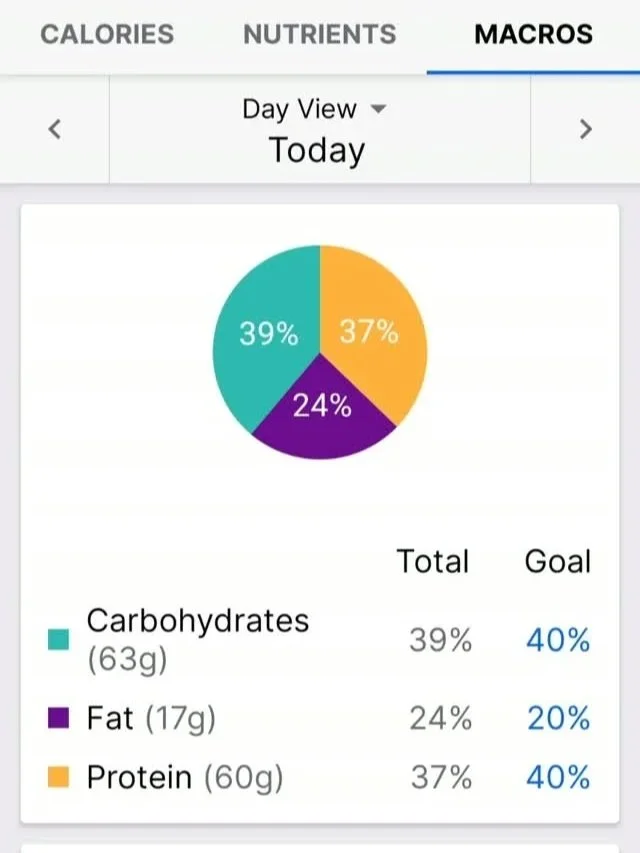
Two weeks of honest tracking beats a year of guessing.
How to Track It Right
You need a system that separates signal from noise. Here's ours:
Weigh yourself daily, same conditions. Morning, after the bathroom, before food or water. Daily weigh-ins aren't about obsessing over each number — they're about collecting enough data points that the noise cancels out. I prefer the Withings Body Smart Scale because it’s relatively inexpensive (new on eBay for about $75) and accurate to itself.
Log your food honestly for at least 14 days. Every bite, every oil, every drink. Use an app. Weigh food when you can, especially calorie-dense stuff. Two weeks of honest data before you change a single thing — you need a baseline before you make decisions. I use MyFitnessPal. It’s free and the database of pre-programmed foods and beverages. But choose your poison. It takes discipline to log your food consistently and accurately.
Use a Food Scale. Weigh your food. Does that sound crazy? As crazy as eating a bag of Nacho Cheese Doritos?
Judge the trend, not the weigh-in. Average your weight over 7–14 days and compare averages. If the two-week average is trending down 0.5–1% of bodyweight per week, the plan is working. A single high weigh-in means nothing. A flat two-week average means something. Use Trendweight.com as it can be set up to sync with the Withings scale. This recommendation is gold because it pre-selects for only the most important variables and automatically logs the trend to let you know if you are really in a deficit.
Track waist and photos too. The scale measures total mass. A tape measure and progress photos tell you about composition. When the scale stalls but the waist shrinks, you're winning — that's often fat loss masked by water or muscle gain. I don;t personally do this. I just look in the mirror and use my belt as a guide, YMMV.
Don't change the plan based on one week. The single most common fat-loss error: three good days, one bad scale reading, total program overhaul. Give every change 14 uninterrupted days before you judge it. The body doesn't work on your schedule. Protect the first 14 days. Like a baby.
Protein's Role in the Equation
Calories determine whether you lose weight. Protein determines what you lose. In a deficit, your body wants to shed expensive tissue — muscle — along with fat. Adequate protein is what tells it to keep the muscle and burn the fat instead. The target: roughly 0.7 to 1.0 grams per pound of bodyweight per day, with the higher end for leaner, harder-training people.
Distribution matters too. Muscle protein synthesis — the process of building and repairing muscle — is triggered per meal, and the trigger is the amino acid leucine. Research by Dr. Don Layman and others shows each meal needs a sufficient leucine threshold (roughly 2.5–3g, which typically means 30–40g+ of quality protein) to fully switch on synthesis. Three protein-adequate meals beat one giant protein dinner and two carb-heavy afterthoughts. Vegetable proteins should be avoided. Arguably they work, but create their own set of problems (more on this later).
And protein helps the intake side as well: it's the most satiating macronutrient and has the highest thermic effect. In a deficit, protein is doing triple duty — preserving muscle, controlling hunger, and costing more to digest.
When to Adjust
If you've tracked honestly for 14 days — daily weigh-ins, real food logging, trend analysis — and the average isn't moving, then and only then do you adjust. One adjustment at a time:
Option A: Reduce daily intake by 300–500 calories. Small, sustainable, measurable. Not a crash. Not a cleanse. A few hundred calories.
Option B: Add activity. More steps, more conditioning, an extra training day. Increase output instead of cutting input — especially if calories are already low.
Pick one. Not both. If you change two variables, you won't know which one worked.
Before a second cut, get help. If you've adjusted once and stalled again, something subtler is going on — metabolic adaptation, NEAT collapse, tracking drift, or targets that were wrong from the start. That's when a coach and real data (RMR test, DEXA scan) earn their money. Guessing harder is not a strategy.
What you don't do: slash another 1,000 calories, add two-a-days, or jump to a new diet. Aggressive cuts tank adherence, cost you muscle, and slow the metabolism you're trying to work with. The goal is the smallest deficit that produces steady progress — not the biggest deficit you can suffer through.
FAQ
Doesn't insulin make you store fat regardless of calories? No. Insulin is a storage hormone, but it doesn't create energy from nothing. In a caloric deficit, you lose fat whether insulin is high or low. What insulin and blood sugar do affect is hunger, energy, and adherence — real factors, but they work through the equation, not around it.
What about a "slow metabolism"? Can it prevent fat loss? Metabolic rate varies between people, and it does slow with aggressive dieting and muscle loss. But "slow" means hundreds of calories of difference, not thousands. An RMR test tells you your actual number — and almost everyone who thinks their metabolism is broken is actually just underestimating intake, overestimating burn, or both.
Do I need to do cardio to lose fat? No. Fat loss requires a sustained caloric deficit; cardio is one tool for creating it. Strength training plus high protein preserves muscle in a deficit, which is why it's the priority. Cardio helps — especially walking, which drives NEAT without impairing recovery — but no amount of cardio outruns an untracked diet.
Why am I losing inches but not pounds? Because you're losing fat and gaining or retaining muscle and water simultaneously. The scale measures total mass; the tape measures composition. Inches lost with a stable scale is recomposition — it's a win, not a stall. A DEXA scan will show you exactly what's happening.
How fast should fat loss happen? A sustainable rate is about 0.5–1% of body weight per week. Faster than that usually means muscle loss, misery, and rebound. Slower is fine if it's consistent. Anyone promising dramatically faster results is selling you water loss and a crash.
The Bottom Line
Calories in versus calories out is the foundation. Not the only thing that matters — the most important thing, the thing everything else sits on top of. Hormones, food quality, sleep, and stress all influence the equation. None of them replace it.
The people who succeed at fat loss aren't the ones with the best diet. They're the ones who understand the mechanism, track honestly, ignore the daily noise, and give the process enough time to work. Fourteen days of clean data before you judge anything. Adjust one variable at a time. Protect your muscle with protein and strength training.
The Way Forward
If you want help doing this right — real calorie targets from real testing, not calculator guesses — that's what we do. Strong Sports offers Nutritional Counseling and Programming built around your actual data. RMR testing to set your true calorie target. DEXA scans to track fat versus muscle, not just scale weight. A coach who's spent 20+ years doing this, adjusting plans based on trends instead of panic. If you're in Pasadena, come in. If you're anywhere else, our online coaching works the same way.
Stop looking for the loophole. Learn the equation, track the trend, and do the work. It works every time.